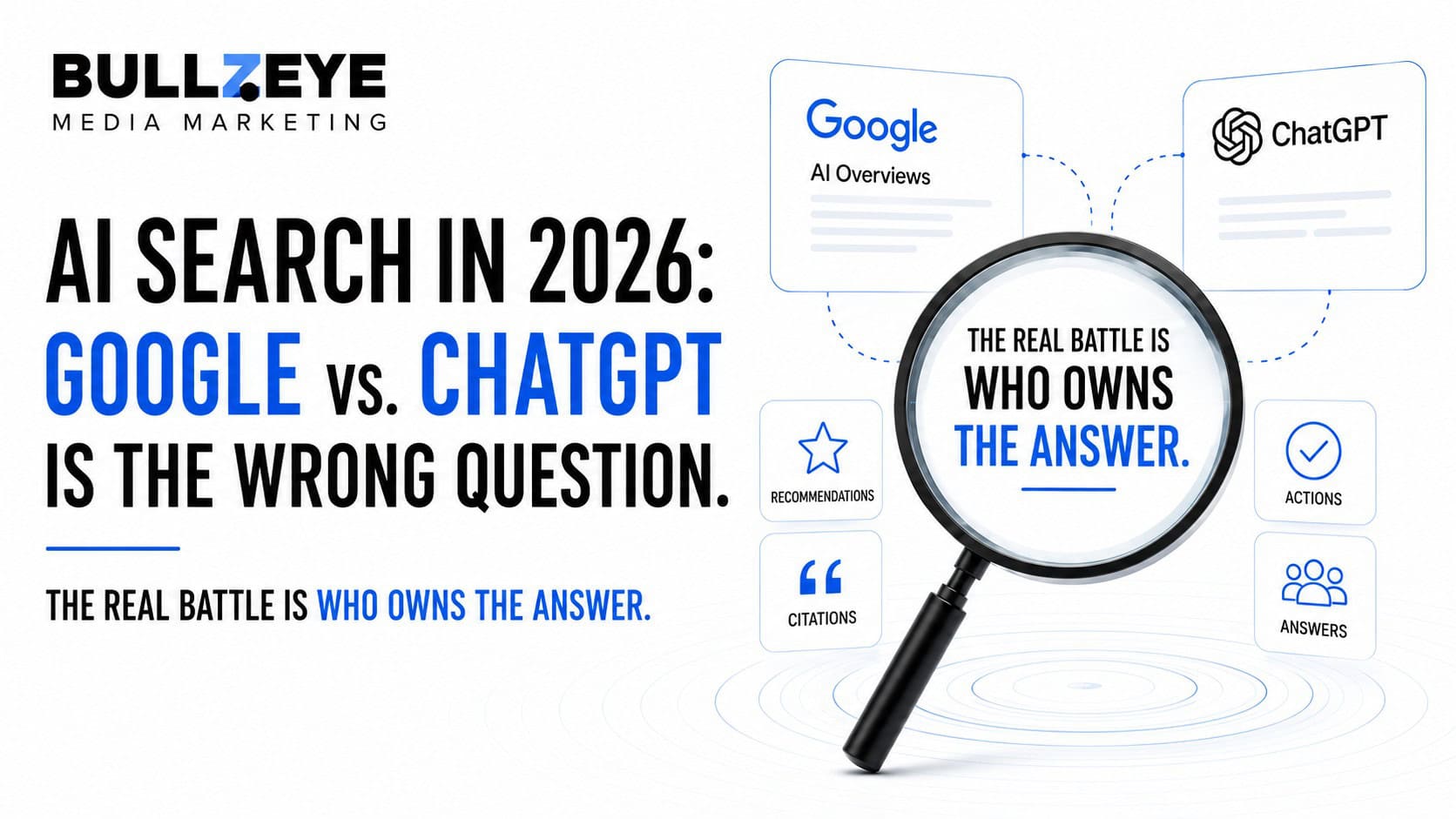

For thirty years, customer acquisition followed a predictable path: earn a position on page one of Google, capture the searcher’s click, and convert that traffic on your website. That mechanism is shifting rapidly. Today, high-intent buyers in New Jersey bypass lists of blue links entirely. They ask AI engines to name trusted providers, summarize complex service options, and make direct recommendations.
When a prospective client asks an AI assistant who to hire, the engine provides a synthesis rather than ten search results. If your company is not named in that synthesis, your traditional rankings cannot save the sale. You are not losing prospects because your services are inferior; you are losing before the conversation starts because the engine chose your competitor. Securing your presence in these answers requires a distinct discipline: Generative Engine Optimization (GEO).
What Is Generative Engine Optimization (GEO)?
Generative Engine Optimization (GEO) is the strategic process of structuring your brand’s digital footprint so artificial intelligence search engines cite, summarize, and recommend your business when users ask commercial-intent questions. While legacy search engines index web pages, generative engines evaluate entities, synthesis, and verified facts across the web to build trusted answers.
AI discovery does not rely on a single algorithm. Modern buyers interact across a diverse set of generative platforms, including:
- ChatGPT (OpenAI): Conversational search and direct brand shortlisting.
- Perplexity AI: Real-time research engine offering inline source citations.
- Google Gemini & AI Overviews: AI-driven syntheses displayed above traditional organic search results.
- Microsoft Copilot: Enterprise-focused conversational search embedded in business tools.
- Anthropic Claude: Analytical assistant synthesizing comprehensive industry analyses.
- Apple Intelligence (Siri) & Amazon Alexa: Voice-activated and on-device AI assistants providing direct local answers.
These platforms do not simply index your content; they interpret it, cross-reference it against third-party sources, and decide whether your business meets their criteria for authority.
How Is GEO Different From Traditional SEO?
Traditional search engine optimization focuses on ranking specific URLs for explicit target keywords. You optimize on-page copy, build backlinks, and refine metadata so Google places your URL on a search engine results page (SERP).
Generative Engine Optimization shifts the objective from ranking a URL to establishing your brand as a recognized entity. AI engines do not rank pages; they evaluate entities, corroborate facts, and synthesize answers based on multiple data sources. While SEO drives impressions and clicks to a website, GEO earns authoritative mentions, structured citations, and direct recommendations inside the AI interface. Visibility without commercial impact is noise, and GEO directly influences the buyer at the moment of decision.
| Feature / Dimension | Traditional SEO | Generative Engine Optimization (GEO) |
|---|---|---|
| Primary Goal | Rank web pages on search engine results pages (SERPs) | Earn brand citations and direct recommendations in AI answers |
| Core Target | Web pages, URLs, and specific keyword strings | Recognized entities, brand authority, and factual consensus |
| Content Focus | Keyword density, page length, and meta tag optimization | Direct answers, structured schema, and verifiable proprietary data |
| Discovery Mechanism | Algorithmic indexing and PageRank-style link popularity | Large Language Model (LLM) synthesis, retrieval, and entity mapping |
| Outcome Metric | Organic clicks, impressions, and click-through rates (CTR) | AI citations, recommendation share, and pre-sold inbound pipeline |
To maintain a competitive edge, businesses must integrate their technical foundation—such as professional SEO services—with dedicated AI search visibility strategies.
Why Does This Matter for New Jersey Businesses Right Now?
New Jersey is one of the most commercially competitive regions in the country. Local practices and firms face dense regional competition while operating between two major media and financial hubs: New York City and Philadelphia.
Consider how commercial inquiries in the Garden State are evolving:
- A homeowner in Livingston does not scroll through directories; they prompt ChatGPT: “Who are the most reputable HVAC contractors near Essex County with 24/7 emergency service?”
- An injured commuter asks Gemini: “Which Jersey City personal injury lawyer should I call for a commercial transit accident?”
- A patient moving to Morris County asks Perplexity: “Who is the best family dentist in Morristown, NJ for cosmetic veneers?”
- A business in Edison prompts Copilot: “Find a certified B2B accounting firm in Central New Jersey that handles state tax credits.”
In each scenario, the AI engine returns two or three specific firms with a summary explaining why they were selected. If your company operates in Newark, Hoboken, Paramus, Princeton, or Cherry Hill, missing out on that AI shortlist directs high-value clients straight to your competitors.
We are currently in a 12-to-24-month early-mover window. AI models are establishing their knowledge graphs, identifying authoritative entities in specific geographic regions, and determining which brands are trustworthy. The businesses that build their AI authority footprint now will secure a compounding advantage for years to come.
What Makes a Brand Findable, Trustworthy, Recommendable, and Citable?
AI answer engines operate within a strict credibility economy. They prioritize sources that minimize the risk of hallucination or inaccuracy. To earn consistent inclusion in AI-generated answers, your brand must satisfy four foundational pillars:
- Findable (Clear Entity Architecture): AI engines must unambiguously understand who you are, what services you provide, and your exact geographic operating area. This requires robust schema markup, structured site architecture, and unified entity profiles that eliminate ambiguity.
- Trustworthy (Verified Digital Footprint): Language models corroborate what you say about yourself against third-party sources. Unanimous sentiment across reputable trade publications, local news outlets, verified directories, and customer reviews builds algorithmic confidence.
- Recommendable (Commercial Intent Alignment): An engine recommends a business when its specific solutions map directly to the user’s context, budget, and constraints. Clear explanations of your specialized capabilities allow the engine to position you as the ideal solution.
- Citable (Answer-First Content): Engines favor content structured for easy extraction. Providing direct definitions, concise data points, and transparent processes makes your content the preferred source for synthesis.
Underpinning these four pillars are two non-negotiable operational requirements: Accuracy and Consistency. If your service locations, physician credentials, partner details, or business hours conflict across platforms, AI models discount your authority and default to a competitor with a cleaner footprint. Businesses with specialized regional needs often collaborate with New Jersey SEO experts to align their technical signals with these machine-readable standards.
Signs Your NJ Business Needs GEO
If your growth strategy relies entirely on traditional digital marketing channels, you may already be experiencing invisible friction. Look for these warning indicators across your organization:
- Organic traffic is softening despite steady SEO keyword rankings: Your URLs remain on page one, but total clicks are declining because AI Overviews and answer bots satisfy the user’s query on the search page.
- AI engines provide inaccurate or outdated information about your company: Asking ChatGPT or Perplexity about your executive team, service offerings, or office locations produces erroneous or incomplete answers.
- Competitors are cited for high-value regional prompts: When asking conversational questions related to your niche in Paramus, Morristown, or Princeton, AI tools consistently recommend other firms.
- Your website has zero citation footprint in answer engines: In-depth research queries on Perplexity or Claude never reference your domain as an authoritative source.
- Inbound prospects report finding you via AI, but you lack attribution: Prospective clients state they discovered you through ChatGPT, yet your marketing team cannot measure or influence that channel.
What Does a Comprehensive GEO Program Include?
Building authority in the AI ecosystem requires an integrated, high-level operational strategy. While proprietary implementation mechanics vary, an enterprise-grade Bullzeye GEO™ service focuses on five strategic core areas:
- AI Visibility Diagnostics: Establishing baseline performance by auditing how major models (ChatGPT, Gemini, Perplexity, Claude, Copilot) perceive, summarize, and cite your brand.
- Authority and Trust Footprint Analysis: Evaluating how third-party platforms, professional directories, and industry databases corroborate your core business entities.
- Content Modernization for Machine Synthesis: Restructuring owned assets into answer-first, semantic content layouts that AI scrapers and retrieval systems can parse without friction.
- Expert-Driven Knowledge Asset Development: Producing proprietary insights, direct clinical explanations (essential for specialized fields such as healthcare SEO), and original data points that AI engines must cite rather than summarize.
- Continuous AI Ecosystem Optimization: Monitoring LLM training updates, retrieval changes, and citation patterns to maintain consistent brand authority over time.
What Results Should You Expect From GEO?
Generative Engine Optimization is an authority-building investment, not an overnight switch. AI visibility improvements typically begin within 3 to 6 months as web-crawling bots index your structured assets and third-party entity signals align.
Over a 12-to-24-month horizon, these benefits compound significantly. As foundational language models refresh their training datasets and real-time retrieval engines repeatedly validate your expertise, your business solidifies its position as the category benchmark.
The primary business objective is not merely tracking vanity citation numbers; it is securing a steady stream of pre-sold inbound opportunities who already trust your brand because an AI assistant recommended you by name.
Frequently Asked Questions
What is the difference between SEO and Generative Engine Optimization (GEO)?
SEO focuses on ranking website URLs on traditional search engine results pages to generate organic clicks. GEO optimizes your company’s entire entity footprint so conversational AI assistants—such as ChatGPT, Perplexity, and Gemini—synthesize your content and directly recommend your business in response to complex user queries.
How long does it take to see measurable results from GEO?
Initial AI visibility improvements and real-time citation gains typically appear within 3 to 6 months. Long-term authority compounds over a 12-to-24-month period as search models update their knowledge graphs and continuously validate your brand’s third-party credibility footprint across the web.
Is Generative Engine Optimization only for large enterprises?
No. While enterprise brands actively use GEO, it is equally vital for regional commercial businesses, healthcare providers, law practices, and professional service firms where trust and reputation drive high-value decisions. Mid-sized local firms in competitive areas gain an outsized advantage by establishing AI authority before competitors do.
How is success measured in an AI search optimization program?
GEO success is measured through Share of Model (how frequently your brand appears across AI engines), citation frequency, summary accuracy, third-party entity corroboration, and self-reported prospect attribution from inbound leads who discovered your business through AI-driven recommendations.
Conclusion
The shift from search engine results pages to conversational AI recommendations represents the most significant change in customer discovery in decades. The brands that lead the next decade will be those that take action while the early-mover window remains open.
To evaluate where your business currently stands in the AI search ecosystem, take these next steps with Bullzeye Media Marketing:
- Scan your brand instantly: Run your domain through the free Bullzeye GEO Scanner to evaluate your current AI visibility score.
- Request an in-depth audit: Partner with our senior team for a comprehensive diagnostic review of what generative engines are telling your prospective customers.
- Connect with our local team: Visit us at our Livingston, New Jersey offices on North Hillside Avenue to build a forward-looking digital growth strategy for your brand.
Ensure your company is the one AI engines recommend. Let us help you future-proof your visibility today.